Learn to use humor as a clinical tool for well-being
Grounded in peer-reviewed psychology and real therapeutic frameworks — CBT, ACT, narrative therapy, and more — The Humor Clinic teaches you to build levity as a deliberate, evidence-informed skill, not a personality trait you either have or don't.

"Humor deserves the same careful, evidence-informed attention we give every other tool for human well-being — and that's exactly what we do here."
— G. Timothy Marte, PsyM, CPLC, PGC
What you'll learn
What you'll be able to do
- Explain the major theories of humor — incongruity, relief, and superiority — and connect them to emotion regulation, cognition, and social bonding.
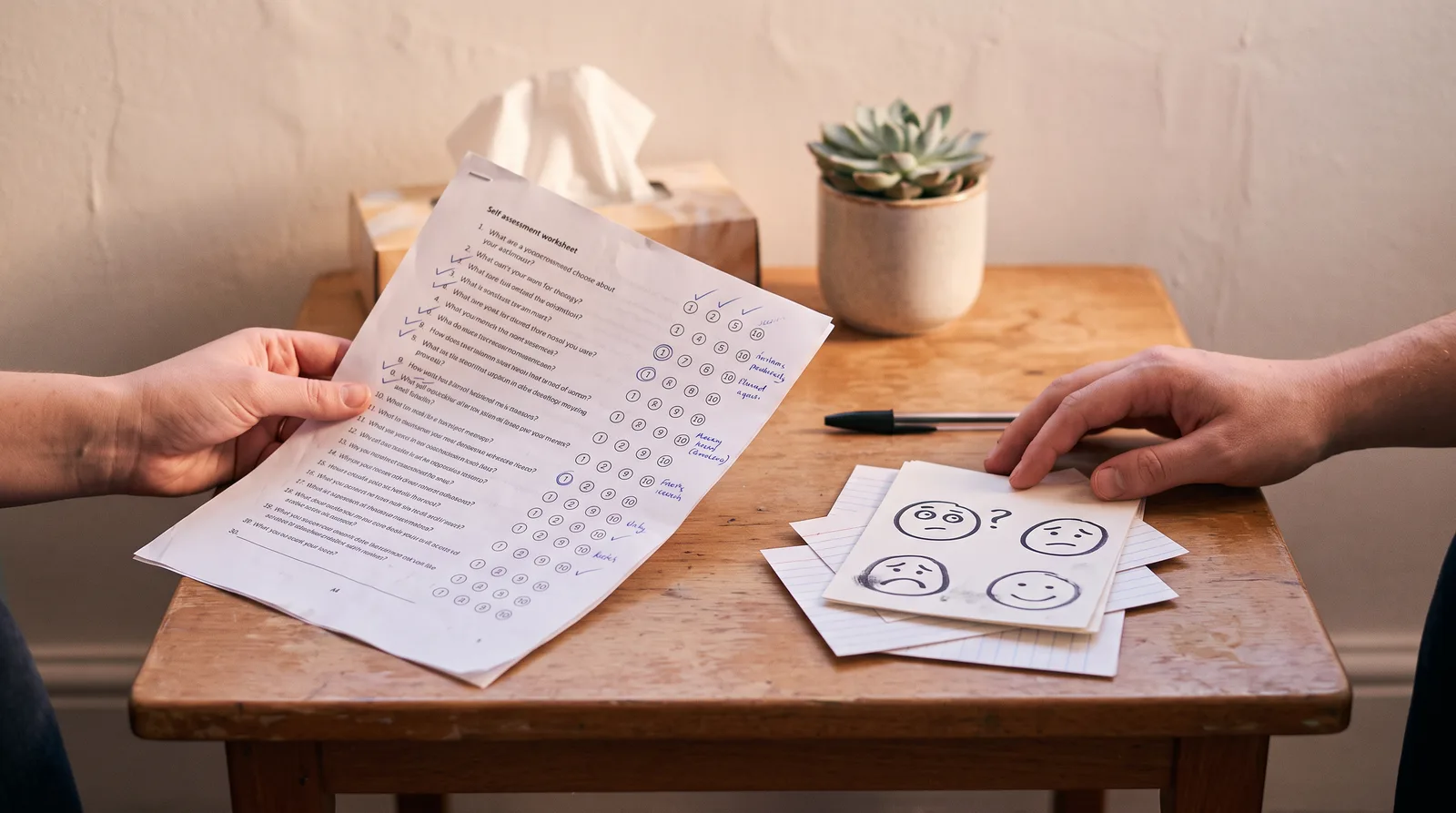
- Identify adaptive and maladaptive humor styles (affiliative, self-enhancing, aggressive, self-defeating) and assess your own patterns using validated self-report tools.
- Describe what peer-reviewed research shows about humor, laughter, stress physiology, and mental health — including where the evidence is mixed or still developing.
- Apply humor-based techniques within cognitive-behavioral, acceptance and commitment, narrative, and mindfulness therapeutic frameworks.
- Use playful and expressive methods — including improvisation exercises, laughter practices, and creative writing — to build spontaneity and psychological flexibility.
- Design a personalized humor practice plan with measurable goals, and recognize when humor is inappropriate or counterproductive across clinical, grief, trauma, and cross-cultural contexts.
How it works
A school that adapts to you
This isn't a set of static videos. Every lesson is generated live and tuned to where you actually are.
We learn your level
A quick placement check tailors your starting point so you're never bored or lost.
Lessons adapt as you go
Each lesson is written for your pace and your goal, adjusting as your skills grow.
Your AI coach keeps you moving
Checkpoints, feedback, and gentle nudges turn progress into a real result.
The curriculum
What's inside your school
6 modules · 24 lessons

The Science of Humor: Theories, Psychology, and Physiology
Establishes the psychological and biological foundations of humor, covering major theories and what peer-reviewed research actually shows about laughter and well-being.
- 1.1What Is Humor? Definitions, Misconceptions, and a Skill-Based ModelIncluded
- 1.2The Big Three: Incongruity, Relief, and Superiority TheoriesIncluded
- 1.3Humor, Laughter, and the Brain: A Neuropsychological OverviewIncluded
- 1.4What the Research Actually Shows: Evidence, Gaps, and Honest CaveatsIncluded
Humor Styles: Adaptive, Maladaptive, and Self-Assessment
Introduces the four humor styles framework, teaches learners to distinguish helpful from harmful humor patterns, and guides personal self-assessment.
- 2.1The Four Humor Styles: Affiliative, Self-Enhancing, Aggressive, and Self-DefeatingIncluded
- 2.2Measuring Your Humor: Using the Humor Styles Questionnaire and Other Validated ToolsIncluded
- 2.3Adaptive Humor as a Coping ResourceIncluded
- 2.4When Humor Hurts: Recognizing and Shifting Maladaptive PatternsIncluded
Humor in Therapeutic Frameworks: CBT, ACT, and Mindfulness
Shows how humor-based techniques are integrated within cognitive-behavioral, acceptance and commitment, and mindfulness approaches to promote psychological flexibility.
- 3.1Cognitive Reframing Through a Humorous Lens: CBT ApplicationsIncluded
- 3.2Defusion, Playfulness, and Psychological Flexibility in ACTIncluded
- 3.3Mindful Levity: Noticing Absurdity in the Present MomentIncluded
- 3.4Humor in Narrative Therapy: Reauthoring Stories with LightnessIncluded
Playful and Expressive Practices: Building Your Humor Skill Set
Provides hands-on experiential methods — improvisation, laughter practices, and creative writing — to develop spontaneity, flexibility, and playful expression.
- 4.1Improv Principles as Psychological Tools: Yes-And and SpontaneityIncluded
- 4.2Laughter Practices: Laughter Yoga, Simulated Laughter, and Somatic BenefitsIncluded
- 4.3Creative Writing and Humor: Absurdist Journaling, Parody, and Comic ReframingIncluded
- 4.4Playfulness in Daily Life: Micro-Practices for Levity and Noticing the AbsurdIncluded
Humor in Helping Relationships: Ethics, Boundaries, and Clinical Contexts
Prepares practitioners and caregivers to use humor responsibly within therapeutic, coaching, educational, and healthcare relationships — including when not to.
- 5.1Therapeutic Use of Humor: Principles, Alliance, and Clinical JudgmentIncluded
- 5.2When Humor Is Contraindicated: Grief, Trauma, Acute Distress, and VulnerabilityIncluded
- 5.3Cross-Cultural Competence and Humor: Navigating Difference RespectfullyIncluded
- 5.4Humor for Caregiver Resilience: Preventing Burnout Without Bypassing PainIncluded
Designing Your Personalized Humor Practice Plan
Synthesizes the full course into a concrete, measurable personal plan, helping each learner integrate humor skills into their daily life, work, or practice.
- 6.1Auditing Your Humor Life: Strengths, Gaps, and Growth EdgesIncluded
- 6.2Setting Measurable Humor Goals: A Well-Being Goal-Setting FrameworkIncluded
- 6.3Building Your Humor Toolkit: Choosing Techniques That Fit Your LifeIncluded
- 6.4Sustaining the Practice: Accountability, Adaptation, and Long-Term GrowthIncluded
Who it's for
Is this you?

Mental health practitioners
Therapists and counselors who want to integrate humor into CBT, ACT, or narrative sessions with genuine clinical grounding and ethical clarity.

Psychology students
Graduate and undergraduate students who want to go deeper on the science of humor — theories, research, and therapeutic application — beyond what coursework covers.

Wellness coaches
Coaches and wellness professionals looking for evidence-based playfulness tools they can use responsibly with clients navigating stress and burnout.
Healthcare & nursing staff
Nurses and care providers who lean on dark humor to cope and want to understand it better — and build a more sustainable, intentional approach to levity at work.

Resilience seekers
Thoughtful adults who feel they've lost their sense of playfulness and want a structured, science-backed path to reclaiming it in daily life.

Improv & creative practitioners
Facilitators, writers, and performers curious about the psychological mechanisms behind why humor works — and how to apply those principles purposefully.
Questions
Frequently asked
Your teacher
A note from your teacher

G. Timothy Marte, PsyM, CPLC, PGC
If you've ever felt the unmistakable shift in a room when someone says exactly the right slightly-absurd thing at exactly the right moment — the exhale, the laughter, the sudden sense that things might actually be okay — you already know, intuitively, that humor does something real. You've probably also sensed its opposite: a joke that lands wrong, a quip that minimizes, levity that arrives too early and closes a door that needed to stay open. Humor is powerful. That's precisely why it deserves to be taught carefully.
I built The Humor Clinic because I kept noticing a gap. The psychology of humor is a genuine, well-developed field — with serious theories, peer-reviewed research, validated assessment tools, and decades of clinical writing. And almost none of it was making its way into practical skill development for the people who could use it most: helping professionals who want to work with levity responsibly, and curious individuals who want more resilience and playfulness in their lives but have been told, implicitly or explicitly, that they're just "not that funny." That framing, I'd argue, is both wrong and a little sad.
Humor is a learnable skill. Not performance, not charm, not a fixed personality trait — a skill, with identifiable components, trainable techniques, and a body of evidence behind it. In this school, we start with the science: the major theories of why things are funny, what your brain and nervous system are actually doing when you laugh, and what the research honestly supports (including where it's inconclusive — I'm not going to oversell this). Then we turn to self-knowledge, using validated tools to map your own humor patterns and understand what's serving you and what isn't.
From there, we get practical. You'll see how humor shows up — carefully, skillfully — inside cognitive-behavioral therapy, Acceptance and Commitment Therapy, mindfulness practice, and narrative approaches. You'll try improv-derived exercises that build psychological flexibility, laughter practices with genuine somatic grounding, and creative writing methods that help you find the absurd even in the difficult. And we'll spend real time on the ethics: when humor helps, when it harms, and how to navigate grief, trauma, cultural difference, and caregiver burnout with both levity and integrity.
This isn't a school for people who want to be funnier at parties. It's for people who suspect — correctly — that playfulness is a serious business, and who want to develop it with the same rigor they'd bring to any other clinical or personal growth skill. I'm glad you're here. Let's get to work — and probably laugh a little along the way.
— G. Timothy Marte, PsyM, CPLC, PGC
Start your journey today
Get instant access — learn at your own pace with an AI coach in your corner.
$59/mo
Recurring billing · cancel anytime
Secure checkout · Instant access
- 6 modules, 24 lessons
- AI-adaptive lessons tuned to your level
- Quizzes & checkpoints to lock in progress
- Your own AI learning coach
- Learn on any device, at your pace
- Full access for as long as you're subscribed